Gamified Assessment Platform: designing games that measure what interviews cannot
Client
視界創意科技 (Faceborder)
My role
UX, Game Design, Visual Design
Year
2014 – 2017
Type
Enterprise · Mobile · B2B
My role
I was the UX Design Lead and Gamification Expert across the platform and its game library. The scoring models and behavioral frameworks were defined by psychologists: that was their domain and I worked within it. Everything else was mine: game concepts, interaction design, visual design, level structure, platform architecture, and user testing methodology.
Over three years I designed more than 20 games across categories including strategy, logic, team intelligence, leadership, and communication. Each started with a client brief and a psychologist framework, and ended with a validated, shipped mobile experience tested with real participants at partner universities every trimester.
The problem
Interviews are subjective. Games are not.
Traditional hiring and training rely heavily on interviews: one person’s impression of another, shaped by how well someone presents themselves under pressure. This approach is difficult to standardise, hard to scale, and prone to bias.
Faceborder’s premise was that how someone plays a game under structured conditions reveals things an interview cannot. Decision-making speed, risk tolerance, pattern recognition, collaborative behaviour, strategic thinking under time pressure: these traits emerge naturally through gameplay in ways that are measurable and comparable across participants.
The design challenge was to make the games genuinely engaging while keeping them reliable as assessment instruments. An experience that was fun but produced inconsistent data was not useful. An experience that produced clean data but frustrated players would not be completed. Both had to be true at once.
The games
Three examples from the library
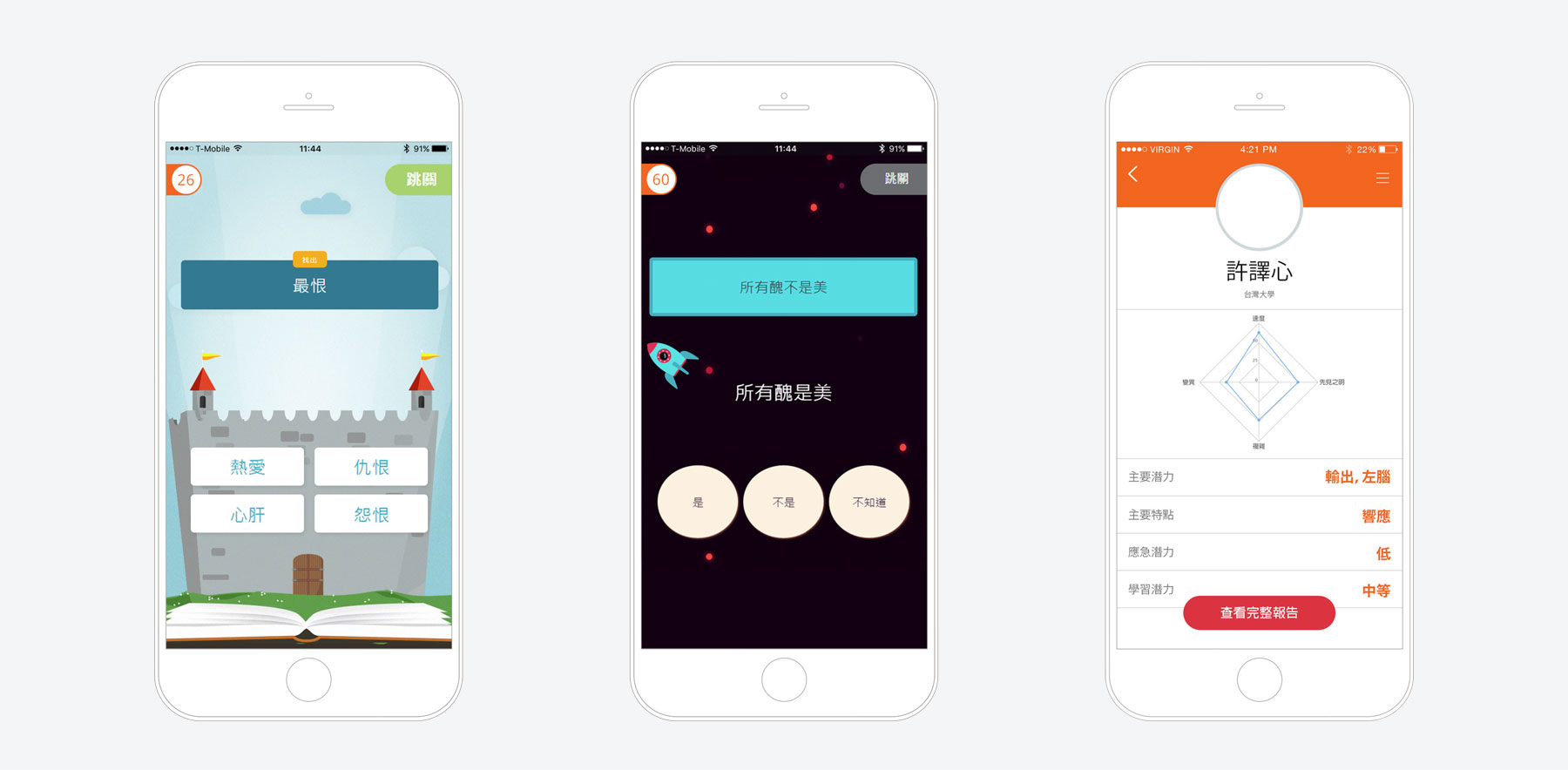
Each game was built around a specific set of behavioral traits defined by psychologists. The mechanic had to naturally surface those traits without players needing to know that was what it was measuring.
Individual · Strategy
Strategy Game
Players navigate market scenarios and make sequential decisions under time pressure and incomplete information. The game measures how users analyse situations, form hypotheses, and adjust their approach when initial strategies are challenged or fail.
- Information analysis
- Strategic planning
- Adaptability under pressure
Individual · Logic
Logic Game
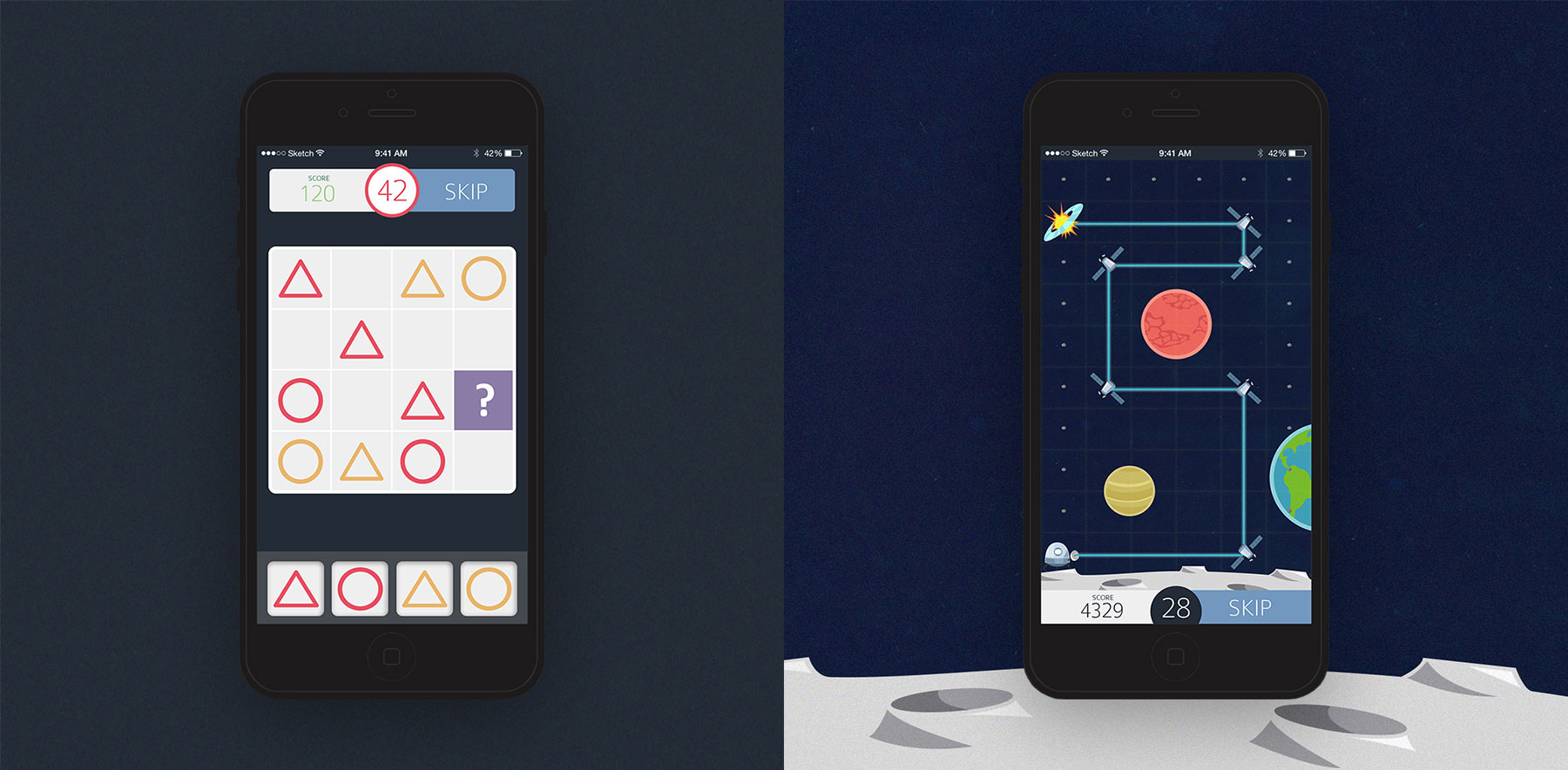
Players work through pattern and sequence challenges of increasing complexity. Designed to measure reasoning speed and accuracy, with a level structure calibrated to maintain engagement across a wide range of cognitive ability.
- Pattern recognition
- Logical reasoning
- Problem solving speed
Group · Collaboration
Team Brain
A multiplayer game where teams share information and coordinate decisions to succeed. Individual scores and group outcomes are tracked separately, revealing how players behave differently when personal and collective goals align or conflict.
- Communication clarity
- Team coordination
- Individual contribution
The process
From psychological brief to validated game
Every game followed the same development cycle, repeated across more than 20 titles over three years. The consistency of the process was part of what made it possible to maintain quality at that volume.
-
01
Brief and framework
Each game started with a client brief defining the use case (hiring, training, or academic research) and a psychologist-defined framework specifying which behavioral traits to measure and how scoring would work. This was fixed input, not something I designed.
-
02
Game concept and mechanic
Working within the scoring framework, I developed the game concept: the setting, the core mechanic, the visual language, and the interaction model. The goal was to find a mechanic that would naturally surface the target behaviors without participants consciously modifying how they played.
-
03
Level design and learning curve
I applied level design principles to structure the experience: an accessible entry point, a consistent difficulty curve, and enough variation to maintain engagement across the full session. Getting this wrong meant participants dropped off early or coasted without producing meaningful data.
-
04
Prototype and university testing
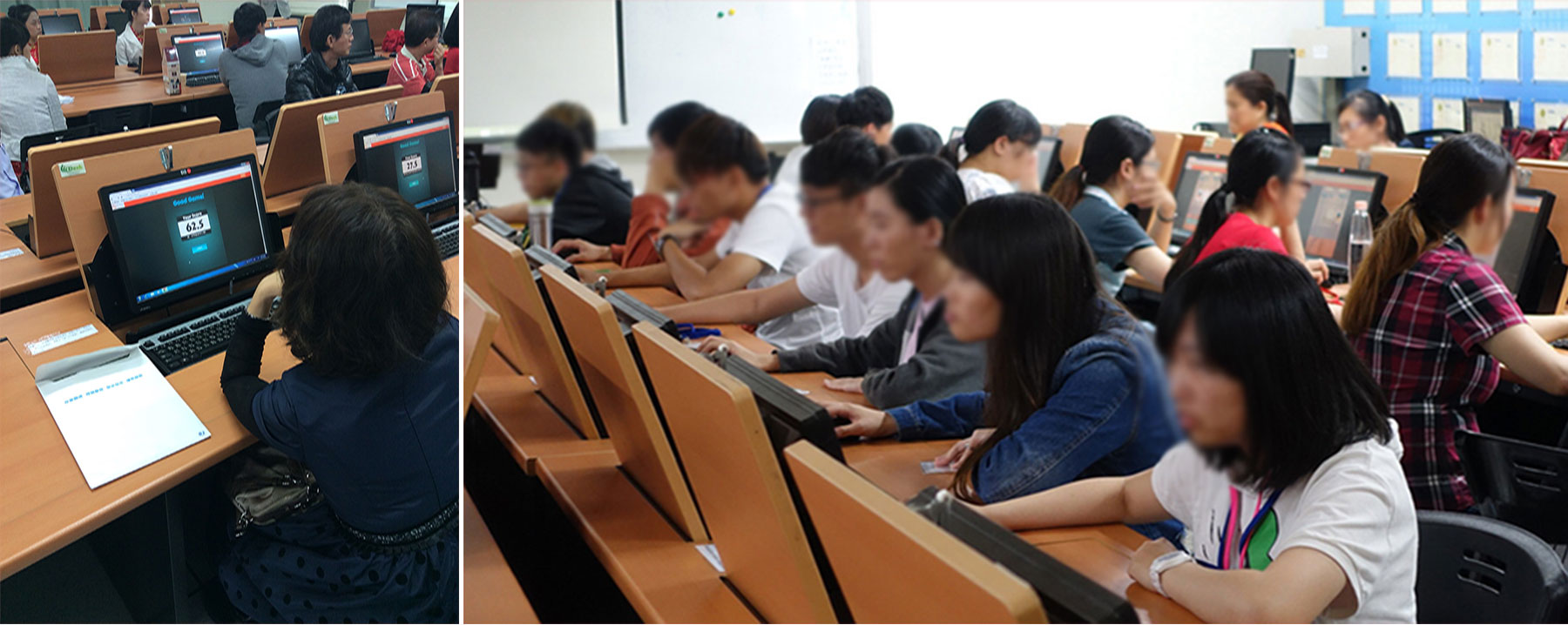
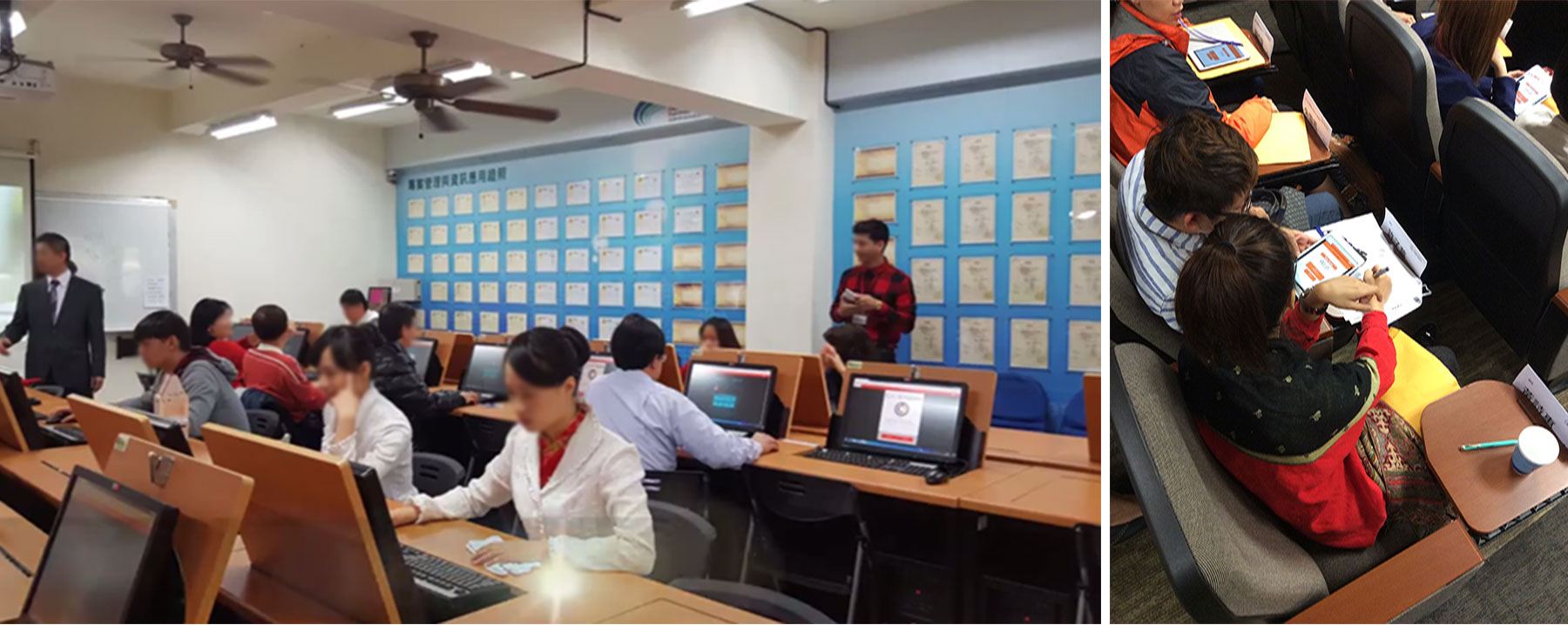
Interactive prototypes were tested every trimester with groups of 20 to 30 students at partner universities. Sessions included observation, screen recording, and post-test interviews. Both the experience and the underlying scoring algorithms were refined based on what the data and the participants revealed.
The platform
A system built around access, sessions, and results
Beyond the games themselves, the platform needed to support the full assessment workflow for enterprise clients. Participants accessed game packages through session codes tied to specific events, allowing results to be grouped and compared at a group level. After completing their session, participants received an individual behavioral report. Clients received both individual and aggregated dashboards.
The information architecture had to support a growing library of games, multiple simultaneous client events, individual and group-based assessment modes, and results meaningful to both HR professionals and academic researchers: a range of context that required a scalable, consistent system from the start.
What this work adds
A different set of constraints, a different kind of thinking
Engagement as a requirement
In B2B SaaS, users complete tasks because they have to. In games, they continue only if they want to. Designing for intrinsic motivation under assessment conditions, without breaking measurement validity, required a different design logic entirely.
Cross-disciplinary collaboration
Working within frameworks defined by psychologists meant understanding their constraints deeply enough to design creatively within them, not around them. The collaboration model was closer to a strict technical spec than a product brief.
Visual design ownership
This was the project where I had fullest visual design ownership: game visual language, iconography, illustration direction, and UI. The aesthetic had to feel accessible and engaging across cultures and age groups in Asian enterprise and academic markets.